What Mary Beard Should Read on Holiday
Historians have an unfair advantage. The rest of us look at a ruined castle and think, 'Lovely view.' Mary Beard looks at it and probably wonders who forgot to pay the roof maintenance budget in AD 287.
If I could quietly slip one book into her beach bag, it would be Italo Calvino's Invisible Cities.
It's not a history book. It's better. Disguised as conversations between Marco Polo and Kublai Khan, Calvino invents city after city — places built from memory, desire, fear, ambition and imagination. Every one is fictional. Every one somehow feels true. That's rather like history itself.
People often imagine historians are interested in dates. They're not. They're interested in people. The dates are simply the filing system.
The best history isn't about kings, wars and treaties. It's about discovering that Romans complained about noisy neighbours, medieval students avoided homework with remarkable creativity, and Victorian commuters were almost certainly convinced the trains used to run better.
Human beings, it turns out, have always been wonderfully consistent. Technology changes. Human nature updates far less frequently. That's why reading history is oddly comforting. It reminds us that every generation believes it's living through uniquely confusing times. Then you discover someone was making exactly the same complaint in ancient Athens.
Calvino understands another important truth. Places are never just buildings. They're stories. Ask ten people about London and you'll hear ten different cities. Ask ten people about their childhood home and you'll hear ten different worlds. Memory quietly redraws the map.
Perhaps that's why holidays are such good moments for reading. You leave one place behind long enough to notice it properly. Distance, physical or historical, has a habit of sharpening perspective.
📚 Today's Briefing Shelf
- Main RecommendationInvisible Cities — Italo Calvino
- A ClassicThe Histories — Herodotus
- An Overlooked GemThe Time Traveller's Guide to Medieval England — Ian Mortimer
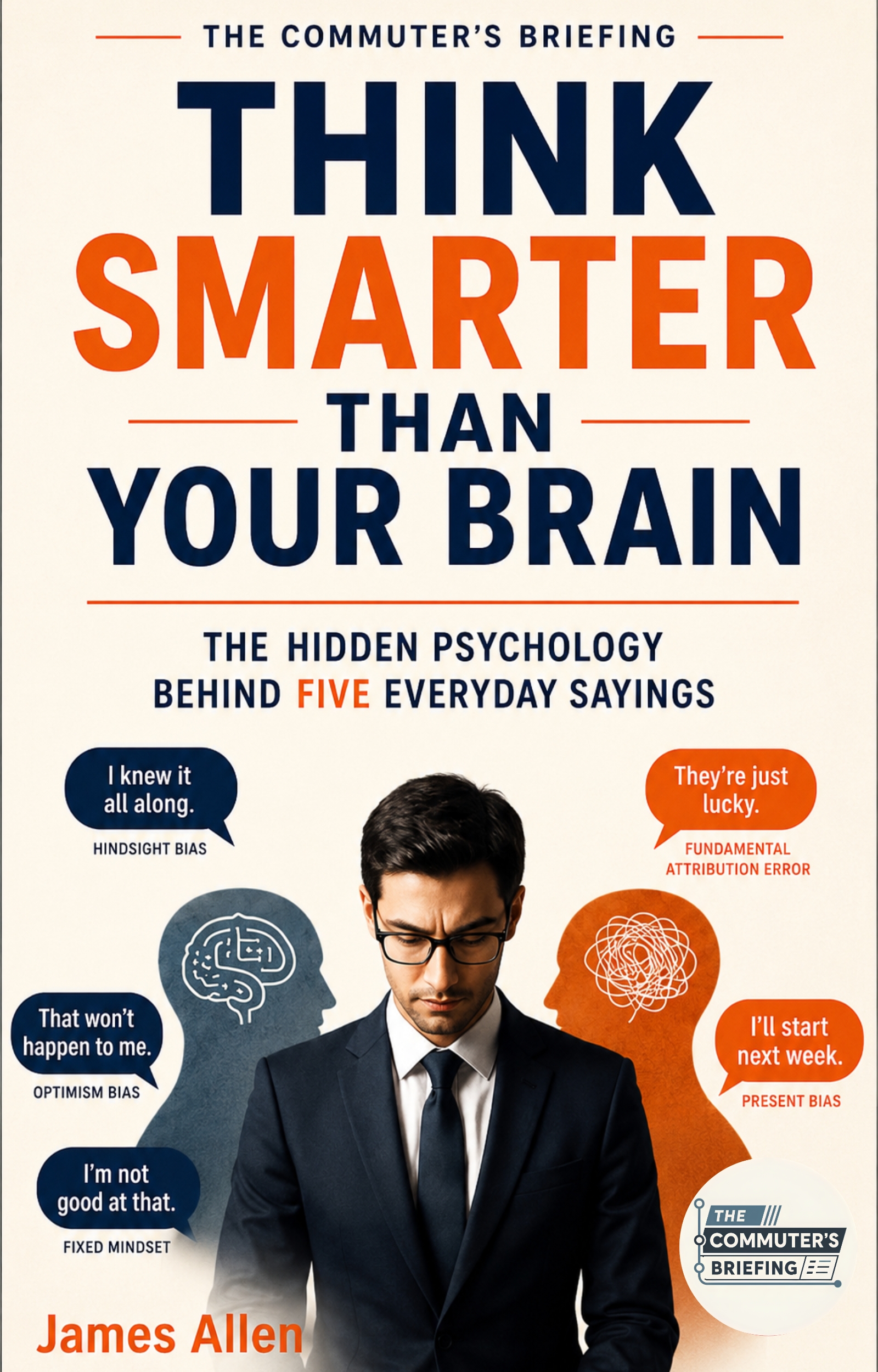
- From the ImprintThe Monk Who Invented Deep Work — James Allen
Because some of the oldest ideas are unexpectedly modern.
History rarely repeats itself exactly. But it does have an excellent memory for human behaviour.
💬 One Idea Worth Taking to Work
The past isn't another country — it's today's world wearing different clothes.