ArticleFree · 9-minute read
Manchester and Chicago Have More in Common Than Either Would Probably Admit
Two great second cities, two working mornings — and the peculiar pleasure of not living in the capital.
Behavioural Science
Briefing No. 05 · Wisdom
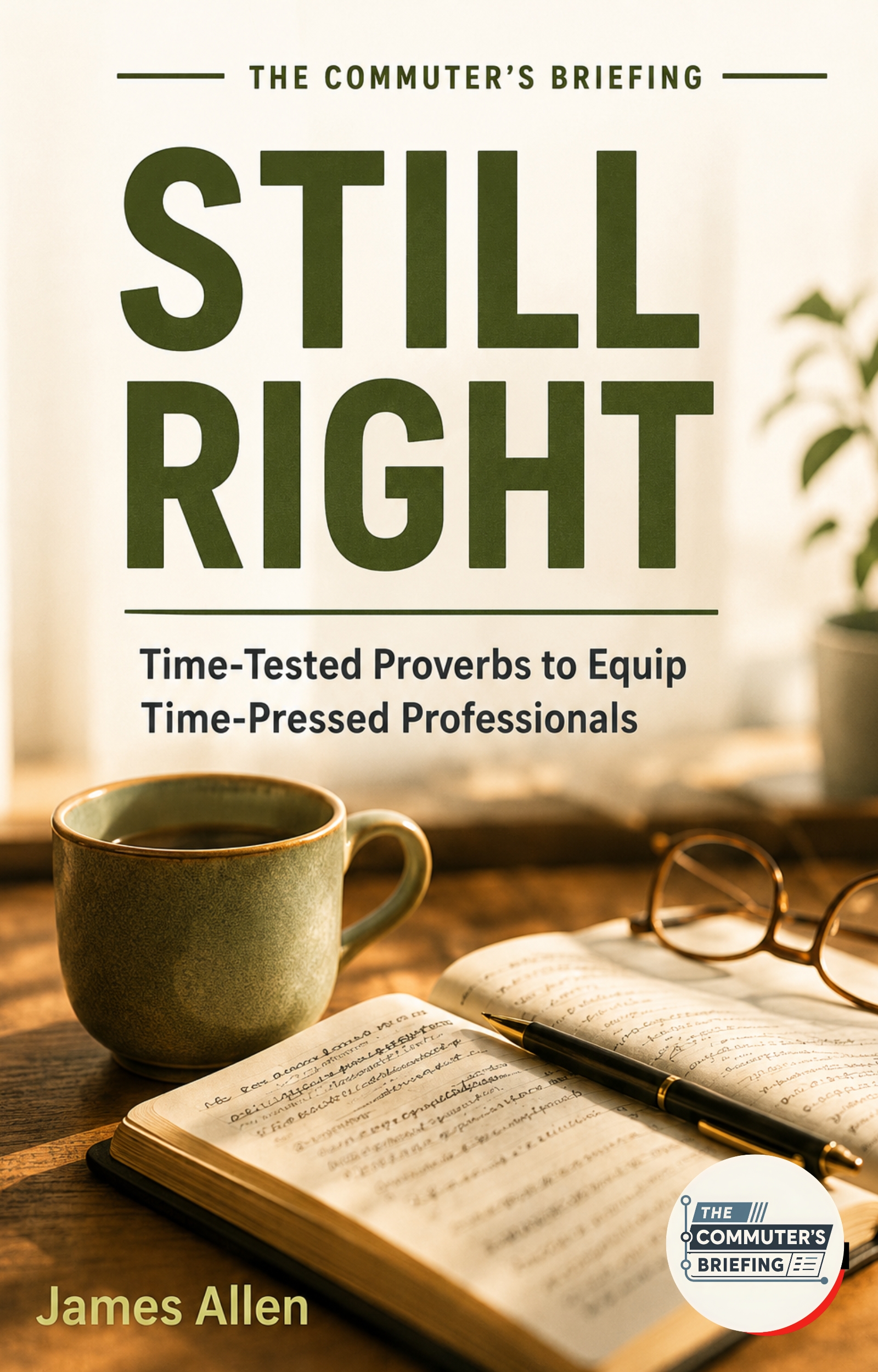
Time-Tested Proverbs to Equip Time-Pressed Professionals · 331 minutes (20 chapters) · Kindle edition · £4.99
The Thesis
What if your grandmother gave sounder career advice than most business gurus? Long before TED Talks, MBAs and the language of productivity, people distilled life's hardest lessons into short sayings — and the sayings survived because they held. Still Right takes a handful of familiar proverbs and shows why modern psychology, behavioural economics and neuroscience keep confirming them. Each chapter pairs the history behind a saying with a story, a finding from research, and a practical way to put it to use. Why an ounce of prevention is worth a pound of cure. Why pride still comes before a fall. Why slow and steady so often beats fast and frantic. Ideas to sit with — and to carry into the day.
A complete, thought-provoking read for £4.99—less than the price of a fancy coffee.
Buy on Kindle£4.99→Available exclusively as a Kindle ebook · Read on any device
Try the idea first
Free Introduction
Your grandmother was probably a better management consultant than most management consultants.
She may never have read Thinking, Fast and Slow. She probably couldn't explain cognitive bias, behavioural economics or systems thinking. She certainly didn't carry a PowerPoint presentation everywhere she went.
But she knew things.
She knew that an ounce of prevention was worth a pound of cure. She knew not to count chickens before they hatched. She knew that actions speak louder than words, that too many cooks spoil the broth, and that you shouldn't put all your eggs in one basket.
She knew these things because they had survived hundreds—sometimes thousands—of years of being tested against reality.
That is something very few business books can claim.
Every year brings another bestseller promising "seven habits," "five secrets," "three rules," or "one weird trick" that will transform your career. Most are based on a handful of case studies, fashionable research, or the latest Silicon Valley success story. Some are genuinely useful. Many quietly disappear within a few years, replaced by the next fashionable framework.
Proverbs are different.
They've already survived centuries of competition.
Generation after generation has thrown them against wars, recessions, family businesses, political intrigue, scientific discovery, technological revolution and ordinary human foolishness. The ones that didn't work vanished. The ones in this book remained because they kept proving themselves right.
That's a remarkable form of peer review.
Yet somewhere along the way, we've started treating these sayings as quaint relics rather than compressed wisdom.
We hear them so often that we stop hearing them.
"Measure twice, cut once." "Don't put all your eggs in one basket." "A stitch in time saves nine."
They become wallpaper—familiar enough to ignore.
Which is a shame, because hidden inside these everyday expressions are ideas that modern psychology keeps rediscovering under longer names.
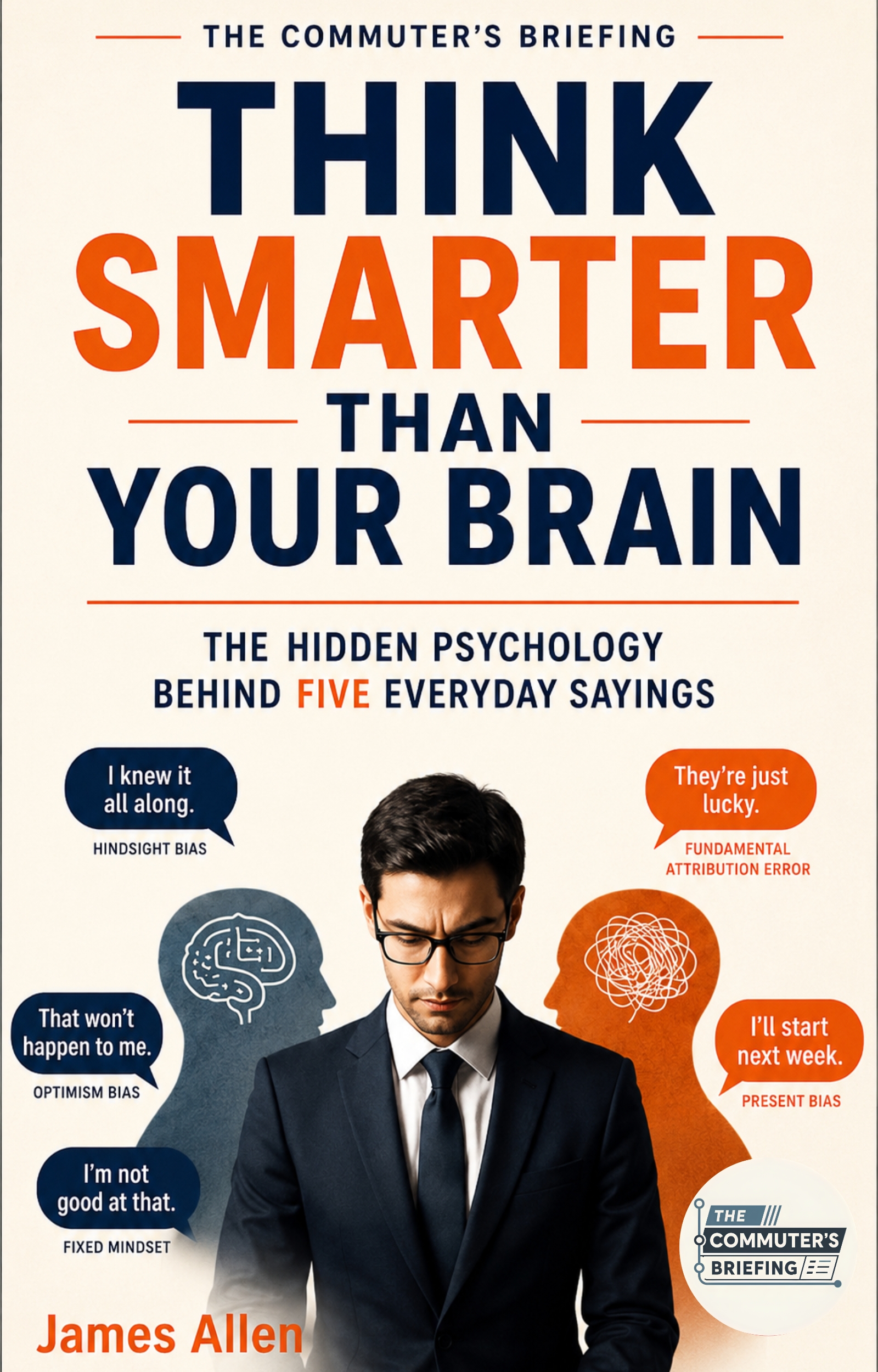
Benjamin Franklin tells us prevention is cheaper than cure. Behavioural economists call it present bias.
Your grandfather advises you to measure twice. Daniel Kahneman explains why System 2 thinking produces better decisions.
Your granny warns against putting all your eggs in one basket. Financial economists call it diversification.
Different vocabulary. Same lesson.
This book isn't trying to replace modern research with old sayings. It's trying to introduce them.
Imagine inviting your grandmother and a Nobel Prize-winning psychologist to lunch. At first they appear to speak different languages. One says, "Pride comes before a fall." The other talks about overconfidence bias. One says, "You reap what you sow." The other discusses delayed gratification and habit formation. By dessert, they're nodding at each other in agreement.
That's the conversation you're about to overhear.
Each chapter begins with a familiar saying—words you've probably heard since childhood. We'll explore where it came from, why it has endured, what modern psychology says about it, how businesses unknowingly use it every day, and how you can apply it before your next meeting rather than sometime next year.
Along the way you'll meet inventors, emperors, engineers, economists, astronauts, entrepreneurs, traders, generals and spectacular fools. Some stories end in triumph. Others end in explosions, bankruptcies or very expensive mistakes. Human beings, fortunately for authors, have always been remarkably inventive in discovering new ways to ignore old wisdom.
That is another reason these sayings endure. Human nature changes much more slowly than technology.
We have smartphones instead of carrier pigeons. Artificial intelligence instead of filing cabinets. Video calls instead of conference rooms.
But we still procrastinate. We still panic. We still overestimate our abilities, underestimate risk, chase shiny distractions, ignore warning signs and convince ourselves that this time will somehow be different.
Our tools evolve. Our brains don't evolve nearly as quickly.
Which means advice that worked in medieval workshops often works surprisingly well in modern boardrooms.
This is especially true if you spend your days solving problems with other human beings.
Whether you lead a multinational company or a team of three, negotiate with clients, manage projects, write software, sell products, teach, design or simply spend your day navigating office politics, your biggest challenges are rarely technical.
They're human.
How do you make better decisions? How do you earn trust? How do you avoid unnecessary mistakes? How do you persuade without manipulating? How do you prepare without becoming paranoid? How do you know when to persist and when to let go?
These aren't new questions. They're ancient questions wearing modern clothes.
This isn't a book you'll need to read from cover to cover in one sitting. In fact, I hope you don't.
These chapters are deliberately short because they were written for real life—the train journey before work, the airport lounge, the coffee queue, the twenty quiet minutes before the day's meetings begin.
Read one. Think about it. Try one idea before tomorrow morning. Then come back for another.
If each chapter gives you one useful story, one memorable insight and one practical action, this book will have done its job.
There's another benefit, too. You'll leave with something interesting to talk about.
The next time someone asks how your week is going, you'll have more to offer than complaints about traffic or the weather. You'll have Benjamin Franklin accidentally ignoring his own advice. You'll know why NASA ignored engineers before Challenger. You'll understand why Netflix deliberately breaks its own systems. You'll recognise ancient wisdom hiding inside modern behavioural science.
Not because trivia makes you wiser. But because stories are how wisdom travels.
Your grandmother knew that too.
So whether you're reading this on a crowded commuter train, in a café before work, waiting for a delayed flight or hiding from another meeting that really could have been an email, welcome.
The people have changed. The technology has changed. The offices have changed. Human nature hasn't.
Fortunately, neither has good advice.
Enjoyed the introduction? Read the rest of Still Right on Kindle.
Buy on Kindle£4.99→Want the complete briefing?
Read it on Kindle→Two great second cities, two working mornings — and the peculiar pleasure of not living in the capital.
Behavioural Science
Why the worst moments can reveal a larger world than fear allows us to see.
Behavioural Science
From BBC News to Rightmove, the nation's search box reveals a country that is anxious, curious, house-hunting and still pretending Wordle counts as intellectual exercise.
Behavioural Science

